
At Chatham Nursery School, language development is at the heart of everything we do. We know that speech, language, and communication difficulties can impact many areas of a child’s life, so early identification and intervention are essential.
At the age of three or four years, children’s language skills are rapidly developing and rates of development vary between children. Some children in preschool will be talkative and well on the road to becoming effective communicators. Other children may not be so talkative. In itself, this does not mean there is anything wrong. Understanding (comprehension) develops in advance of expression, so children may understand certain words and sentence structures, but not use them yet.
WELLCOMM
In Liverpool, WellComm is used across early years and school settings to screen children’s language skills and identify strengths and areas for support. This allows us to provide timely interventions within the nursery to help children progress.
To begin, practitioners complete a profile of each child’s needs and strengths. This helps us:
- Identify children who need targeted support and close monitoring
- Determine if a referral to a specialist (e.g., Speech and Language Therapy or a community paediatrician) is needed
- Provide immediate support while awaiting external services
With long waiting times for speech and language therapy, WellComm ensures children receive help straight away. Reports from WellComm can also be included in referrals for specialist support.
NELI Preschool
From January 2026, we are excited to introduce the NELI (Nuffield Early Language Intervention) Preschool Programme at Chatham. This is a research-based initiative developed by experts to boost children’s early language skills. Over 20 weeks, all children will enjoy fun, story-led group sessions that build vocabulary and communication. For those who need extra support, the programme offers small-group and individual activities tailored to their needs. NELI has been rigorously tested in nurseries across the UK and shown to make a real difference, helping children make months of additional progress in language development. By using this evidence-backed approach, we aim to give every child the best possible start in speaking, listening, and understanding.
How we use Wellcomm and NELI together
The C.H.A.T.H.A.M Approach to Interactions & Language teaching
Our bespoke C.H.A.T.H.A.M approach to language development is designed for the needs of our diverse community. It builds on proven, research‑led practice, including the URLEY Language Learning Principles, Hanen’s O.W.L. strategy and the EEF‑endorsed ShREC framework.
- URLEY provides clear, evidence‑based strategies for strengthening children’s oral language through warm, responsive relationships, rich adult modelling, contextual vocabulary teaching and sustained conversational scaffolding.
-
The ShREC model complements this by offering a simple, memorable structure:
- Share attention
- Respond
- Expand
- Conversation
- The Hanen Observe–Wait–Listen™ approach strengthens this further by helping adults tune into a child’s interests, give them time to lead interactions, and respond thoughtfully to their communicative attempts. This an evidence‑based method shown to increase motivation, confidence and opportunities for rich back‑and‑forth exchanges.
By combining these approaches, we create a rich language environment with daily, meaningful interactions and skilled support for children, turning play and daily routines into powerful opportunities for language learning.
Pre Phonics
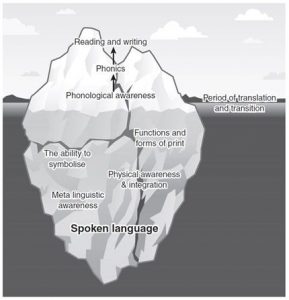
Phonics is a method of teaching children to read by correlating sounds with individual letters or groups of letters. Before children learn to read and write, they need to develop a range of knowledge, skills, understandings and attitudes that underpin explicit, formal, literacy teaching.
At Chatham Nursery School, we focus on Foundational Skills (Pre-Phonics) to develop a really secure listening and attention and phonological awareness so that children can become confident readers and writers once they start primary school.
This includes:
- Oral Language: Develop strong listening, speaking, and discussion skills through interactive storytelling and shared reading.
- Phonological Awareness: Activities like rhyming, singing, and rhythmic texts help children hear and distinguish sounds (phonemes) in words, a crucial pre-reading skill.
- Letter Knowledge: Provide rich visual experiences with books to help children recognise letter shapes and remember them and language rich environments.
Ideas for home learning:
There are many ways that you can support your child to tune into sounds, and help focus their listening and attention skills.
Please have a look through this booklet for ideas: Pre phonics activities for home